
資生堂ギャラリーで開催中の「うたう仲條 おどる仲條 -文字と画と、資生堂と」展と連動し、仲條正義氏とゆかりの深い人方々に、その仕事やまなざしについてうかがう連載「仲條ヲ語る」。
ともに過ごした時間、交わしたことば、現場での記憶——それぞれの視点から浮かび上がるのは、デザイナーとしての姿だけでなく、ひとりの人間としての仲條正義氏です。
第1回は、写真家・ホンマタカシ氏。『花椿』をはじめとするさまざまな企画で撮影を手がけてきたホンマ氏に、最初の出会いとなったリトアニアでの撮影、雑誌づくりの自由な空気、そして晩年に深まった私的な交流についてお話をうかがいました。
——ホンマさんが仲條さんと初めてご一緒したのはリトアニアでの撮影だと聞いていましたが、それまでの仲條さん、そして仲條さんがディレクションをする『花椿』に対してどんなイメージを持っていましたか?
たぶん、仲條さんがデレクションしていたと知ってたと思うけど、それより写真が見たくて当時東銀座の会社にいたから、銀座のデパートの化粧品売り場とかに行って、「花椿」もらってた。特に好きだったのが、シンディ・パルマーノでイギリスのコーンウォールで撮影したヤツとか(1990年11月号)、アフリカのドゴン族の号(1990年4月号)とか。あとこのORDINARY PEOPLE(1991年5月号)も好きだったな。そういう意味では、仲條さんっぽくないデザインっていうか、あんまりデザインしてないタイプの号が好きだったのかも(笑)。
『花椿』の仕事をし始めたのは、90年代前半にロンドンから帰ってきたときに、手当たり次第にいろんな媒体に写真を見せに行っていて、そのときに林央子さん(当時『花椿』編集者)に会って。それで、林さんが担当のページのポートレートを撮った(ヒロミックスとか長島有里枝とか)のが最初かな。それを数回やって、仲條さんと一緒にリトアニアに行くことに。仲條さんに会ったのは、そのときがたぶん初めてで。仕事をする前までは、仲條さんはディレクションが強いイメージがあったけど、実際仕事をしてみたら、そうでもなくて、印象は変わりましたけどね。
——なんでリトアニアだったんですかね?
それは仲條さんに聞いてくださいよ(笑)。 当時はたぶん海外に行ったら2号分の撮影をしてくるというルールがあって。ひとつは、バレリーナがいろいろな場所で踊っているというもので、もうひとつは森の中に絵がイラストを貼り付けた風景。行く前に絵コンテがすべて決まっていて、現場では、その通りに撮ってたと思うけど。とはいえその前僕は広告の現場で、もっとガチッと照明も撮り方も商品の見せ方も全部決まっているような撮影もやっていたから、それと比べるとかなりゆるかった。撮り方に関しては、仲條さん何も言わないんですよ、カメラの指定もないし。絵コンテはあったけども、モデルのポーズや背景の写り込み具合、どういったアングルで撮るかとかは決まってなくて、自由に撮らせてもらった印象です。僕的には、ストレスもなかったし、僕に合いそうな撮影を振ってくれていたと思います。
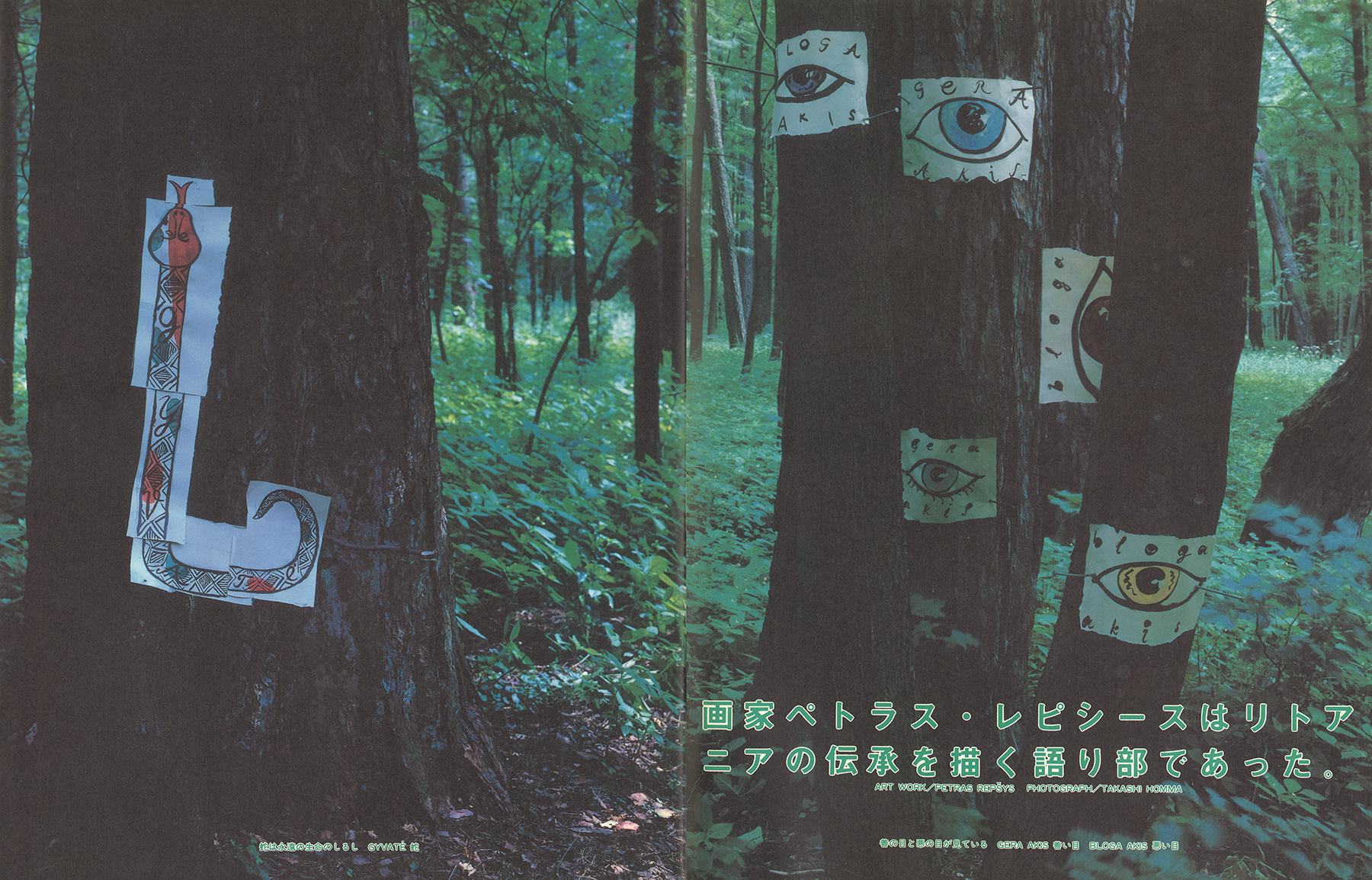
Photographer:ホンマタカシ Takashi Homma
Artwork:ペトラス・レプシス Petras Repšys
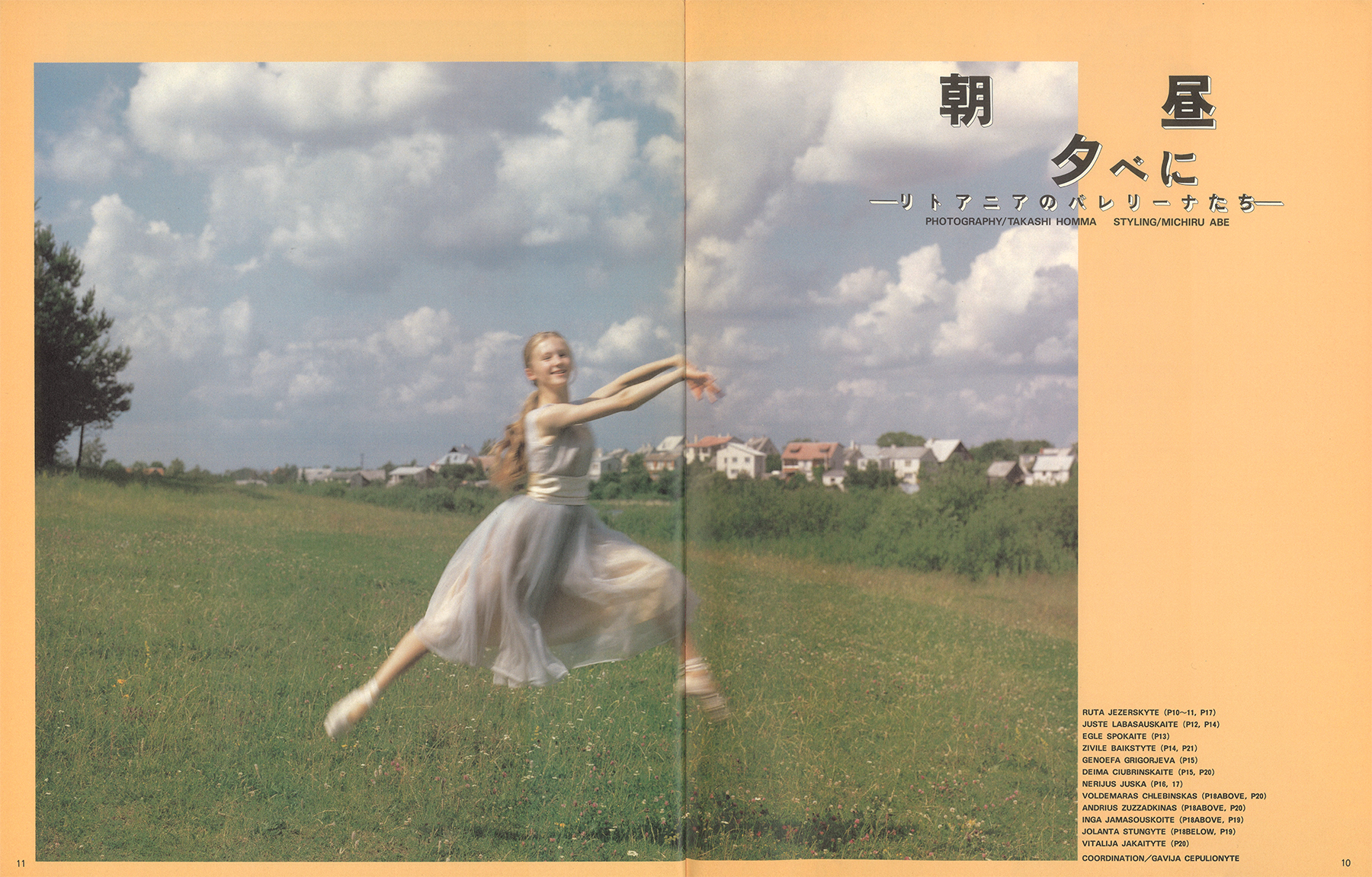
Photographer:ホンマタカシ Takashi Homma
Stylist:安部みちる Michiru Abe
Model:ルタ・ジェルスカイト Ruta Jezerskyte
——仲條さんの仕事で、自分らしくないなと思う写真を撮ったことはありましたか?
ロスのやつ(1997年11月号)とか? でもそれは後から仲條さんがやった合成みたいなデザインだけで 、撮影時に特にうるさく指示されてないと思うし。そんな嫌な感じではなかったんだけど。でもこの号、仲條さん的には、ホンマの写真をいじちゃったみたいな、内心ちょっと意地悪してしまったような気持ちがあったみたい。こっちは全然気にしてないんだけど(苦笑)あ、ひとつ思い出した。ニュージーランドの号のとき、本当は2つ仕事を断って行ったんですよ。そのことを仲條さんに言ったら「仕事は断るもんじゃねえ」って言われて。いやいや、仲條さんのために断ったんですよって(笑)。デザイナーって現場に行かなくても仕事ができる場合があるから、並行していくつも仕事を受けられるかもしれないけど、フォトグラファーは現場に行かないとダメでなのに(苦笑)。
——(笑)。本当に好き勝手ですね……。
だよね。そりゃあないでしょって思った。仲條さん自身は、『花椿』の仕事は相当自由だったんじゃないかな。クライアントもいるようでいないようなもんだし、雑誌と広告の間みたいな感じで当時は予算も潤沢にあって。あんな自由なビジュアルづくり、相当わがまま言いまくってたんじゃないかな、もちろんいい意味で。平山景子さん(当時の『花椿』編集長)だって、他の編集者だって、仲條さんがやりたい仕事を、実現するためにやりやすいようにしていたと思うしね。しかも、それが40年続いたって、本当に奇跡でしかない。あらためて見ると、すごい企画ばっかりだよね。
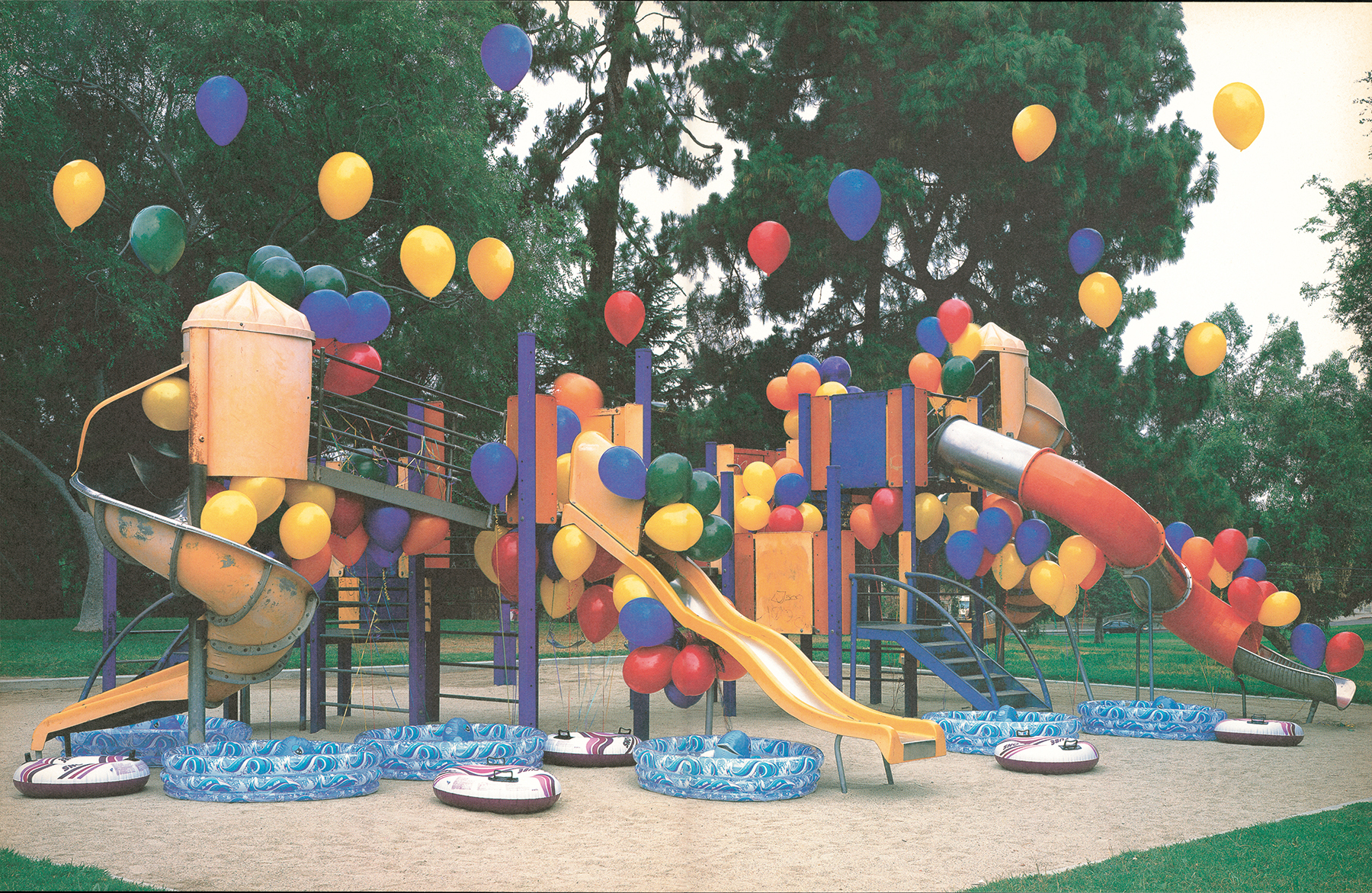
Photographer:ホンマタカシ Takashi Homma
——でも皆さんから話を聞いていると、周囲の方たちは仲條さんが怖くて従っていたというよりは、やってあげたい!という空気だった。愛される人だったんですよね。仲條さんに「雑誌がいっとう偉い」って言われたという話を『僕とデザイン』(アルテスパブリッシング)でも話されていましたね。
そう。繰り返しになっちゃうけど、仲條さんから最初に言われたのが「カメラマンより雑誌のほうがいっとう偉いんだからな」ということ。とにかく雑誌が一番偉いと敢えて釘を刺されていました。
仲條さんとは一時期集中して仕事をしていましたが、その後はだいぶ間が空いていて。晩年、亡くなる3年くらい前から急に仲よくなりました。服部くん(一成)や(中村)至男くん、立花文穂くんとかが、仲條さんを囲む少人数の会を開いていて、呼ばれて行ったんです。そのとき、仲條さんは、僕が行ったことにすごく喜んでくれて。他の人に「最近、ホンマと仲よくしてる」って言ってたらしくて。僕は昔のことに対して、何も嫌な感情をもっていなかったんだけど、仲條さんは気にしていたみたい。だから僕が「仲條さん、仲條さん」って慕うの、嬉しかったみたいですね。その頃撮った、仲條さんのポートレイトは僕のなかでも、重要な写真になりましたね。
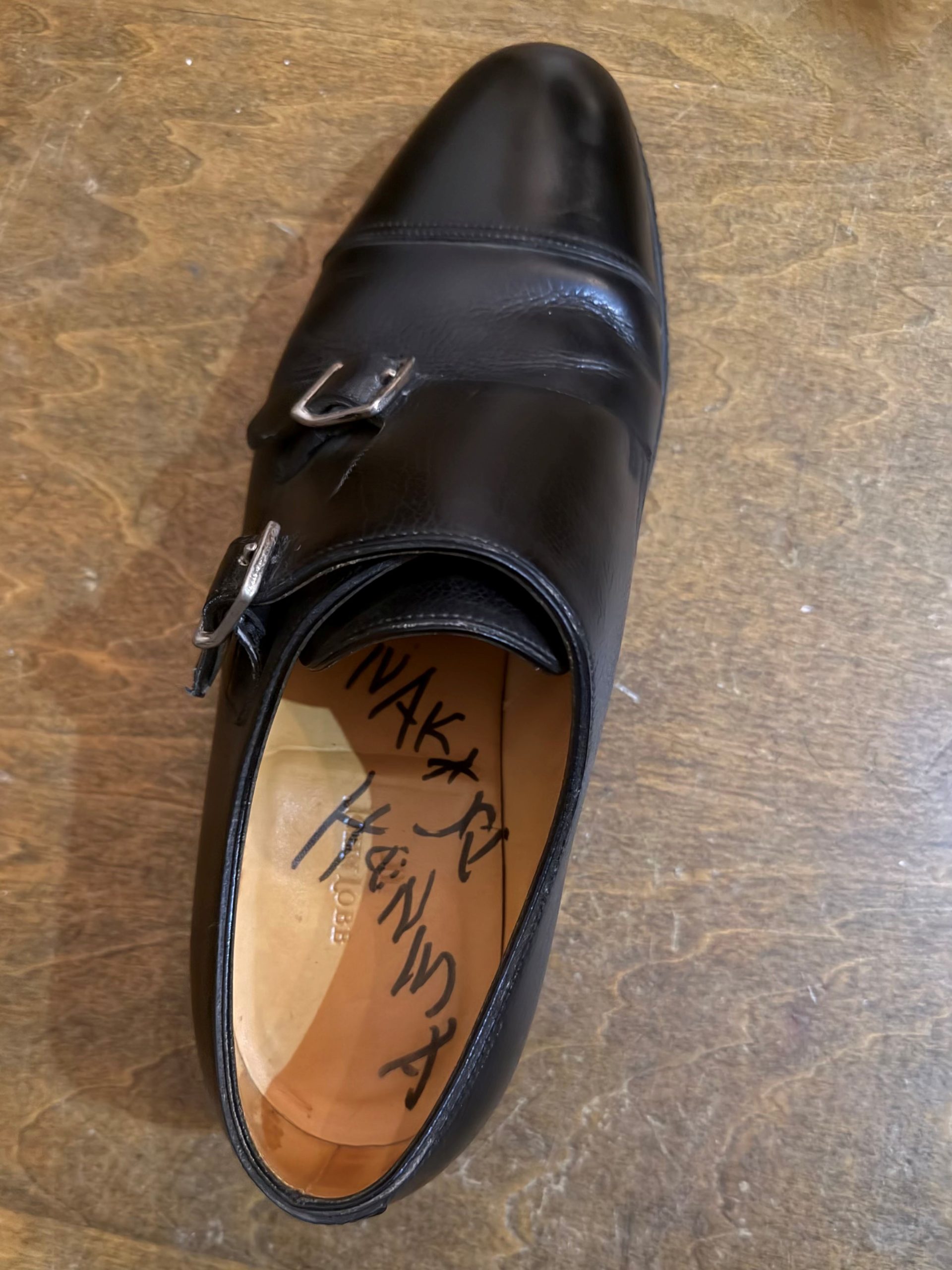
いつか会ったときにジョンロブの靴をもらったんですよ。海外ロケのときに買ったんだけど重いからとか言って。お互いに書こうってサインを入れました。あと、いくつかハガキをもらっていて。亡くなる直前に東京の風景を撮影したムック本の仕事をお願いしていたんだけど、難しいとなって、病気でできませんっていう断りのハガキだったり。そのデザインは結局、服部くんにやってもらったけど。そのハガキはいつか額に入れないと、と思っています。
——すごい!貴重ですね。ハガキは本当にひと言ふた言書いてあるだけなのに、すごく味があって仲條さんの人柄が出ていて。ホンマさんのこと、お好きだった感じが伝わってきます。本当に亡くなる直前まで会われていたんですね。
行きつけのお店がいくつかあって一緒に行くんだけど、お酒も飲んでたしタバコも吸ってた。お店に行って、普通だったら後輩の僕らが頼んであげようって思うでしょ? でも仲條さんは、頼むものは決まってるんだ!
お前ら勝手に頼むな!って言って自分で頼んじゃう。あれも面白かったな(笑)。
——ホンマさんも東京出身ですが、仲條さんも東京の人です。仲條さんのどういうところに東京らしさを感じますか?
これも本のときにしゃべったけど、最初に仲條さんのこと面白いなって思ったのは、昔『dictionary』という雑誌で仲條さんが「[若い人を]蹴落としてもと思っている。悪いか」って書いていて。そのちょっとユーモアのある意地悪な感じが、東京っぽいなと。また、仲條さんは西新宿の辺りで育っているんですが、僕も祖父母がその辺りに住んでいて、子どもの頃しょっちゅう行っていたし、長い間、仲條さんが暮らしていた荻窪辺りは僕が中高生で通っていた学校があった場所の近くだったり、共通点が多くて。
あと六本木一丁目に事務所があったでしょ。すごく狭い事務所に大きなコピー機がドンとあるだけで格好つけた長い打ち合わせテーブルとかなくて。それが逆に格好よくて、そういう感じっていうかな。そういうことやっちゃ野暮じゃん、みたいなところ、なんかほんとの東京の人だなと。
——仲條さんの仕事はたくさんありましたが、ホンマさんが好きだったものを教えてください。
仲條さんの仕事で一番好きなのは、個展のときに描いた富士山の絵のシリーズ。なぜかというと、デザイナーが個展やるときって、ただ自分がこれまでにやった仕事を見せるショーケースが多いでしょ?、あんまり新作だけって人いなくて。仲條さんはだいたい新作ばかりを発表していたでしょ。そこは本当に大尊敬だよね。
——最初にお仕事されたのが96年で、仲條さんが亡くなったのが2021年なので、途中もちろん会わない期間はあったと思いますが、お付き合いは25年とすごく長い。
ちゃんと話すようになったのは、最後の3年間だけだけどね。やっぱり嬉しかったですね。ネガが残ってるかわからないけど、ロスの風船の写真撮ったときに、仲條さんが風船をもって「空を飛ぶみたいな写真撮ってくれ」って言われて撮ったんだけど、ネガどっかにあると思うんだけどな、探さないとね。
ホンマタカシ
1962年東京都生まれの写真家。広告制作会社ライトパブリシティを経てフリーランス。99年に写真集『東京郊外 TOKYO SUBURBIA』(光琳社出版、1998)で第24回木村伊兵衛写真賞を受賞。2023年から2024年にかけて東京都写真美術館にて個展「即興」を開催。
『花椿』には1994年11月号より参加、2000-02年には表紙の撮影を担当する。
上條桂子
ライター/編集者
カルチャー、デザイン、アートについて編集執筆。展覧会の図録や書籍の編集も多く手がける。武蔵野美術大学非常勤講師。著書に『玩具とデザイン』(青幻舎)。近年担当した書籍に『北欧デザインの考え方 プロダクト、建築、テキスタイル 名作をつくった人と時代とアイデンティティ』(渡部千春著、誠文堂新光社)、『校正・校閲11の現場 こんなふうに読んでいる』(牟田都子著、アノニマスタジオ)がある。雑誌『BRUTUS』にて「韓国文化通信」の連載を担当。
https://www.instagram.com/keique
-
仲條ヲ語る#3 「仲條正義流の「本歌取り」」
Talking about Nakajo #3 "Masayoshi Nakajo’s Art of “Honka-dori”"
-
仲條ヲ語る#2 「其ノ、ココロハ 小村雪岱×仲條正義」
Talking about Nakajo #2 "The Spirit Within: Komura Settai × Masayoshi Nakajo"
-
映画には思いや願いがつまっている
Movies are full of thoughts and wishes.
-
Hanatsubaki New Issue No.833
Hanatsubaki New Issue No.833
-
資生堂×ファッションが輝いていた時(後編)
Shiseido x Fashion: A Time of Radiance
Talking about Nakajo #1 "A fundamentally Tokyoite sensibility—even in design"
2026.3.10
Interview and Text/Keiko Kamijo
In conjunction with the exhibition Nakajo Sings, Nakajo Dances—Letters, Pictures, and Shiseido, currently on view at the Shiseido Gallery, this interview series invites people who knew Masayoshi Nakajo well to reflect on his work and presence.
Through shared memories, conversations, and recollections from the field, a portrait gradually emerges—not only of Nakajo the designer, but of Nakajo the person.
The first guest is photographer Takashi Homma, who contributed to numerous projects including Hanatsubaki. In this conversation, Homma reflects on their first collaboration in Lithuania, the unusually free atmosphere surrounding the making of the magazine, and the personal friendship that developed between them in Nakajo’s later years.
—Your first collaboration with Nakajo was a shoot in Lithuania. Before meeting him, what kind of image did you have of him—and of Hanatsubaki under his direction?
I probably knew Nakajo was directing the magazine, but what I really wanted to see were the photographs. At the time I was working in Higashi-Ginza, so I’d go to the cosmetics counters in the Ginza department stores and pick up copies of Hanatsubaki.
The ones I especially liked were the issue photographed by Cindy Palmano in Cornwall, in the UK (November 1990), and the one about the Dogon people in Africa (April 1990). I also liked the issue titled Ordinary People (May 1991).
Thinking about it now, maybe the issues I liked were the ones that didn’t feel very “Nakajo-like”—or maybe the ones that didn’t look heavily designed (laughs).
I started working with Hanatsubaki in the early 1990s, after returning to Japan from London. I was showing my photographs everywhere I could, and that’s when I met Nakako Hayashi, who was an editor at the magazine. The first thing I did was shoot portraits for pages she was editing—people like Hiromix and Yurie Nagashima.
After doing that a few times, I ended up going to Lithuania with Nakajo. I think that was probably the first time I actually met him. Before that, I had the impression that his direction would be quite strong. But once we started working together, I realised that wasn’t really the case. My impression changed.
—Why Lithuania?
You’d have to ask Nakajo that (laughs).
Back then, if you travelled abroad for a shoot, you were expected to produce material for two issues. One of the concepts was a ballerina dancing in various locations. The other showed landscapes in which illustrations were placed within scenes in the forest.
The entire storyboard had already been decided before we left. On location we basically followed it. But compared to advertising shoots I had done before—where everything from lighting to composition to how the product appears is precisely controlled—this was much more relaxed.
Nakajo didn’t say anything about how I should shoot. There were no instructions about the camera or anything like that. The storyboard existed, but the model’s pose, the framing of the background, or the angles—those weren’t fixed. I had the impression I could shoot quite freely.
For me there was no stress at all. I think he gave me assignments that suited the way I work.
—Were there ever times when you felt the photographs weren’t quite “your style”?
Maybe the Los Angeles issue (November 1997). But that was mainly because of the compositing design Nakajo added later. I don’t remember him giving strict instructions during the shoot.
It wasn’t unpleasant or anything. But apparently Nakajo himself later felt that he had “tampered with Homma’s photos,” almost as if he had been a little mischievous about it. I didn’t mind at all (laughs).
Actually, something just came back to me. For the New Zealand issue, I had turned down two other jobs in order to go. When I told Nakajo that, he said, “You shouldn’t turn down work.”
But I turned them down for you! (laughs)
Designers can sometimes take on multiple jobs at once without going on location, but photographers actually have to be there (laughs).
—(laughs) He really did things his own way.
Right? I remember thinking, come on—that’s a bit much.
For Nakajo himself, working on Hanatsubaki must have been incredibly free. There was a client, but also not really—it existed somewhere between a magazine and advertising. At the time the budgets were quite generous as well.
He must have been able to push for exactly the visuals he wanted—of course in a good way. Keiko Hirayama, who was editor-in-chief then, and the other editors too, seemed to be working to make it easier for Nakajo to realise his ideas.
And the fact that this continued for forty years—that’s really extraordinary. When you look back at it now, it’s project after project of remarkable ideas.
—When people talk about him, it doesn’t sound as though they followed him out of fear. Rather, they seemed to want to help him make things happen. He was someone people loved. In the book Design and Me Masayoshi Nakajo, you mention that he once told you, “The magazine is the most important.”
Yes. The first thing Nakajo said to me was, “The magazine is more important than the photographer.”
He really emphasised that the magazine itself came first.
There was a period when we worked together quite intensively, but after that a long time passed without much contact. Then about three years before he passed away, we suddenly became close.
Kazunari Hattori, Yukio Nakamura, and Fumio Tachibana had started organising small gatherings around Nakajo, and I was invited to join. When I went, he seemed genuinely happy that I had come.
Apparently he had been telling people, “I’ve been seeing Homma a lot lately.”
Personally I never had any negative feelings about the past, but it seems Nakajo had been thinking about it. So when I started addressing him warmly as “Nakajo-san,” he seemed pleased.
The portrait I took of him around that time has become an important photograph for me.
One time he gave me a pair of John Lobb shoes. He said he had bought them on an overseas shoot but they were too heavy to carry home. We both signed them.
I also received several postcards from him.
Right before he passed away, I had asked him to design a photobook I was making about Tokyo’s landscape. One of the postcards was his reply saying he couldn’t do it because of illness. In the end Kazunari Hattori designed the book.
Someday I think I should frame that postcard.
—That’s incredible. Even though the postcard only contains a few words, it has so much character. It really conveys his personality. It seems he was very fond of you. You were still seeing him shortly before he passed away.
There were a few places he liked to go, and we would go together. He drank and smoked.
Normally in that situation the younger people would order for the senior person, right?
But Nakajo would say, “I know what I want. Don’t order for me.” And then he’d order everything himself. That was funny too (laughs).
—You’re both from Tokyo. What aspects of Nakajo felt particularly Tokyo-like to you?
I talked about this in my book as well. The first time I thought Nakajo was interesting was when he wrote something in a magazine called Dictionary:
“I think about knocking young people down. Is that bad?”
That slightly mischievous, humorous sharpness felt very Tokyo to me.
Nakajo grew up around Nishi-Shinjuku, and my grandparents lived in that area, so I used to go there often as a child. The area around Ogikubo, where Nakajo lived for many years, was also close to the school I attended when I was a teenager. There were quite a few overlaps.
And then there was his office in Roppongi-Itchome. It was a very small office with a large copy machine sitting there—no long, stylish meeting table or anything like that. And that somehow made it cooler.
Doing something overly polished would have been a bit uncool. That attitude felt very much like a real Tokyo person.
—Of Nakajo’s many works, which ones do you like most?
What I like most are the Mt. Fuji paintings he showed in his solo exhibitions.
When designers hold exhibitions, they often present them as a showcase of their past work. Very few present mostly new work. But Nakajo’s exhibitions were usually filled with new pieces.
I have enormous respect for that.
—You first worked together in 1996, and Nakajo passed away in 2021. Even with periods when you didn’t see each other, that’s a relationship spanning twenty-five years.
But we really only started talking properly during the last three years.
Still, it made me very happy.
I don’t know if the negatives still exist, but when we were shooting the balloon photographs in Los Angeles, Nakajo held a balloon and said, “Take a photo that makes it look like I’m flying in the sky.”
I think the negative must still be somewhere. I should look for it.
Takashi Homma
Photographer born in Tokyo in 1962. After working at the advertising production company Light Publicity, he became a freelance photographer. In 1999 he received the 24th Kimura Ihei Photography Award for his photobook Tokyo Suburbia (Korinsha Press, 1998). From 2023 to 2024 he held the solo exhibition Improvisation at the Tokyo Photographic Art Museum.
He began contributing to Hanatsubaki in the November 1994 issue and photographed the magazine’s covers from 2000 to 2002.
Keiko Kamijo
Writer / EditorWrites and edits on culture, design, and art. She has also edited numerous exhibition catalogues and books. Part-time lecturer at Musashino Art University. Author of Toys and Design (Seigensha).
Recent editorial projects include Thinking about Nordic Design: The People, Eras, and Identities Behind Iconic Works in Product Design, Architecture, and Textiles by Chiharu Watanabe (Seibundo Shinkosha), and Eleven Sites of Proofreading and Copyediting: How We Read Texts by Satoko Muta (Anonima Studio). She writes the column “Korean Culture Correspondence” for the magazine BRUTUS.
https://www.instagram.com/keique