
資生堂ギャラリーで開催中の「うたう仲條 おどる仲條 -文字と画と、資生堂と」展と連動し、仲條正義氏とゆかりの深い人方々に、その仕事やまなざしについてうかがう連載「仲條ヲ語る」。
ともに過ごした時間、交わしたことば、現場での記憶——それぞれの視点から浮かび上がるのは、デザイナーとしての姿だけでなく、ひとりの人間としての仲條正義氏です。
第3回は、アートプロデューサー/編集者の後藤繁雄氏。長く『花椿』と関わってきた立場から、仲條のデザインを、日本の美意識に連なる「本歌取り」という視点から語ります。
——————————————————————————————————————–
和魂洋才とも言うけれど、日本はハイブリッドの技法に長けてきた。単なる「引用」や「剽窃」ではなく、藤原定家が『新古今和歌集』で完成させた「本歌取り」のように、「本歌」をサンプリングしながら、独自のエステティックに変成させる趣好の歴史がある。中国(唐様)や西洋(グリッドシステム)のシンメトリーな美学を巧みに「くずす」ことにもそれがよく表れている。「数寄」とは趣好を集めることの美学だが、そこには、「奇」つまり、「かたよる美学」の肯定が感じられるのである。大杉栄は、「美は乱調にあり」と見事に看破した。
こんなことを言い出したのは、仲條さんのデザインがまさにそれだったな、と思うからだ。
僕は光栄にも『花椿』誌で、対談ページの連載を14年にわたっておおせつかり、そればかりでなく『花椿』の500号展の企画(ザ・ギンザアートスペース)や、仲條さんの御本『花椿ト仲條』という編集者冥利に尽きる仕事にも関わることができた。ちょうど平山景子・小俣千宜両氏が腕を振るった黄金編集長時代で、僕自身は直接的に『花椿』の編集には関わらなかったが、外から『花椿』が作られるエコシステムをつぶさに見ていた。また、僕は対談連載の前からも、仲條さんに他のお仕事もよく依頼していたので、本当にしょっちゅう仲條事務所に入り浸っていたのだ。仲條さん自身は、東京藝大の「図案科」時代の卒業だから、モダンデザインから始まった人だけれど、僕から見ると仲條さんの師匠世代にあたる亀倉雄策、河野鷹思らとは一線を画す、乱暴に言えばポストモダニティに突入している人だった。古風で伝統的な職人美学があるのに、エットレ・ソットサスにも通じるポストモダンの人なのである。僕は典型的なYMO世代の編集者で、テクノとサンプリング派だから、世代は離れていたのだが、気が合ったのだと思う。仲條さんの「本歌取り」のやり方には、とても影響された。思い出すのは、ある時に仲條事務所に行ったら、『花椿』の編集企画のために、台割にラフスケッチをしているところだった。彼はいつも藁半紙に鉛筆で描いていた。仲條さんはよく海外のファッション誌を見ていた。もちろん、まだSNSもない時代。最新流行やクリエイションの同時代性は、紙媒体が担っていた。全てが加速度的に「情報」に還元されていく時代に『花椿』の編集はあったのだ。仲條さんの仕事は、情報を表現に生成し直すことだったと思う。仲條さんから僕が学んだのは、そんな海外雑誌を表紙から裏表紙の広告にいたるまで、どんな小さな写真にいたるまで、1ページずつ丁寧にチェックすること。ちょうどそのころ、クリスチャン・ラクロワ(だったと思う)か何かの、小さな記事の写真にバラが写っているのを仲條さんは目に止めて、「バラの特集を作ろうか」と言った。そして、藁半紙にスケッチを描き、それがロンドンで写真家シンディ・パルマノが撮影して、傑作ページに仕上がることになる。見事な「本歌取り」だった。「引用」に見えるかもしれないが、変成の美学がツボなのだ。そう、時代や流行に消費されないものにね。
仲條さんはいつも小さなバックをもっていて、その中には通勤に読む文庫とか入っていた。ある時、事務所の机にちくま文庫の『青山二郎全文集』が出ていた。そのころ僕はまだ、白洲正子に審美眼をたたきこんだ目利き、青山二郎の本は読んでいなかったので、びっくりして、すぐ買った。ははん、なるほどね。
仲條さんがデザインした『花椿』は、中高生から見て育ったけれど、幸運にも一緒に仕事もでき、いろんな奥義も教えてもらった。
仲條正義は、深いよ!
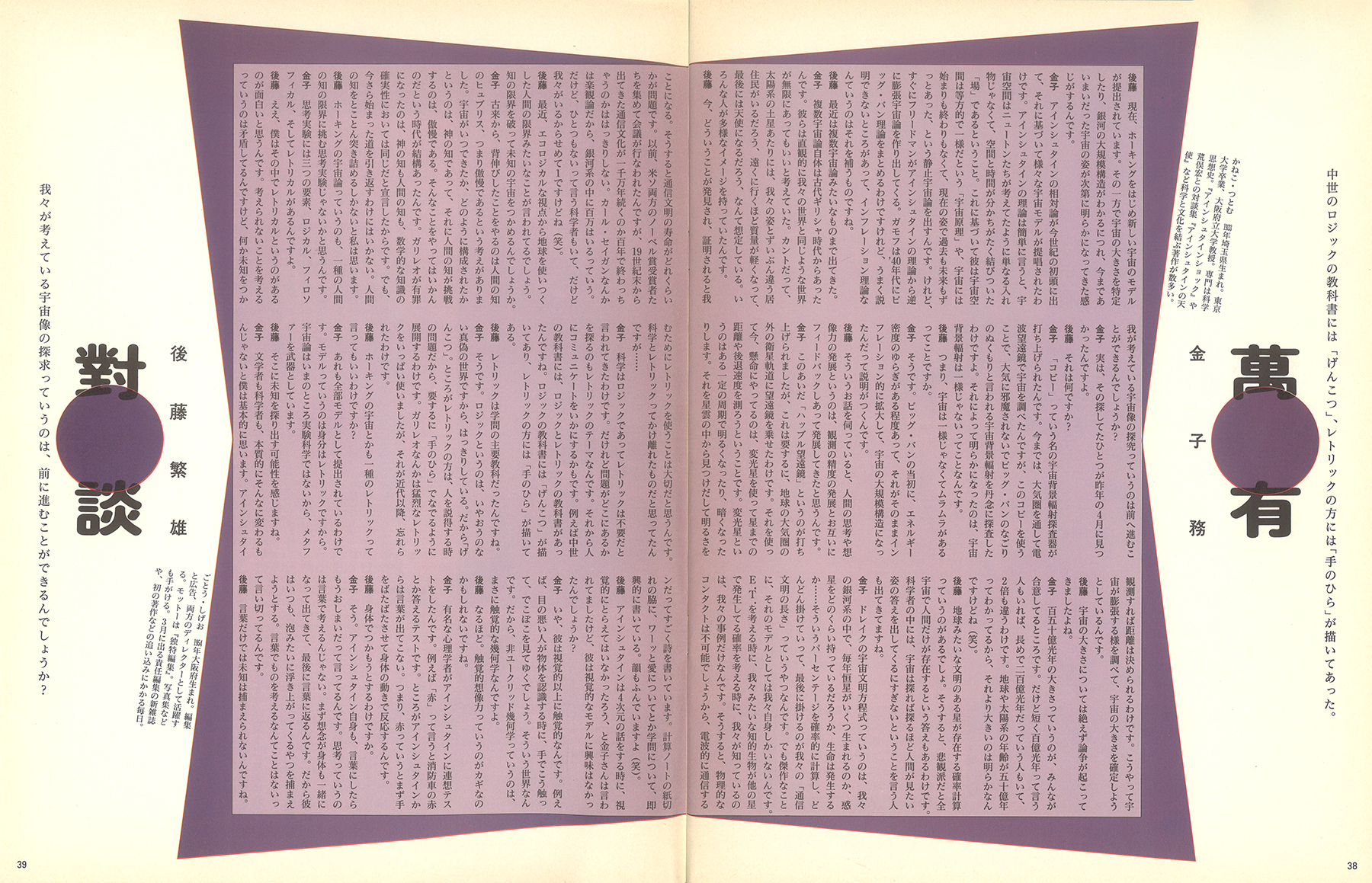
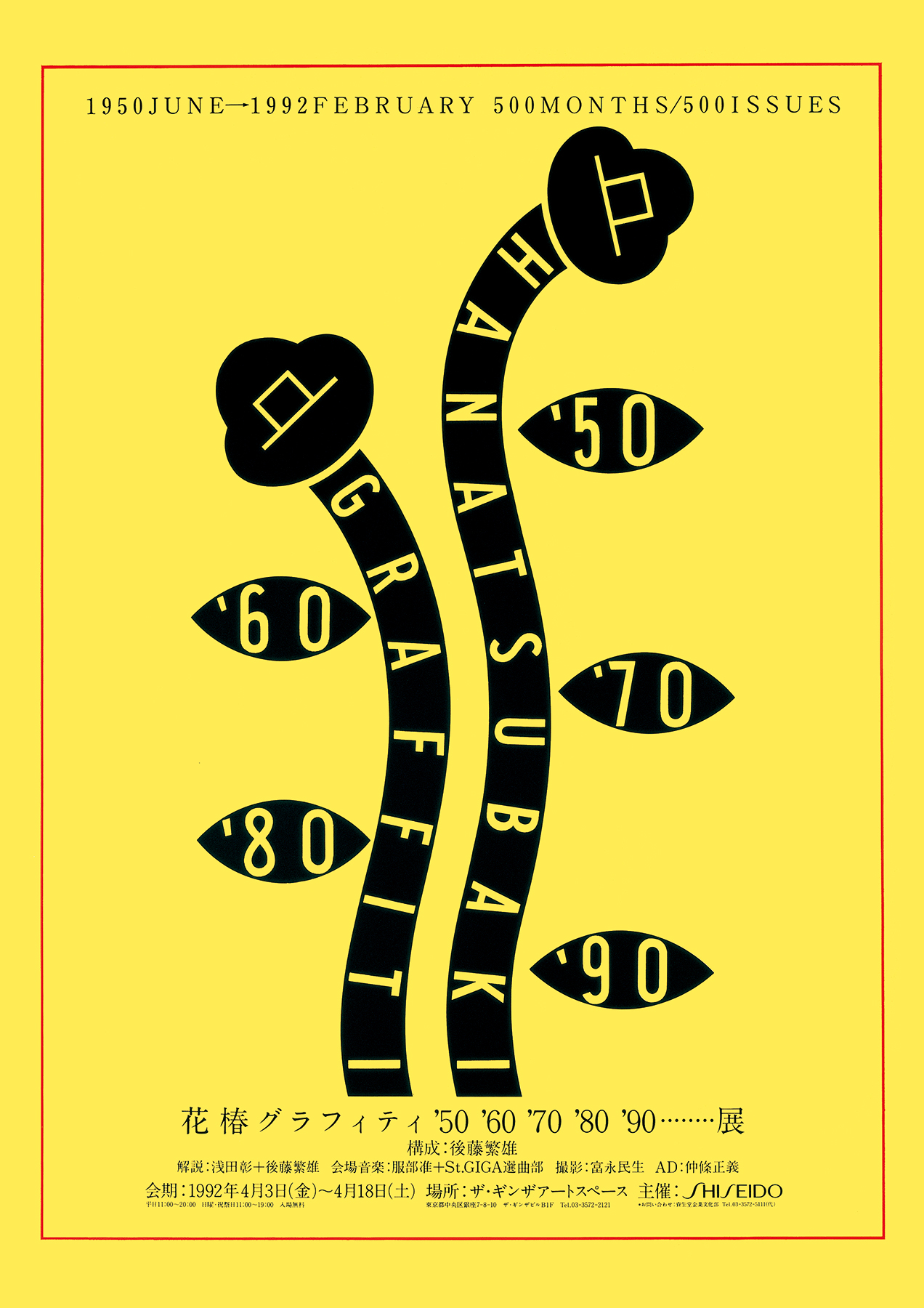
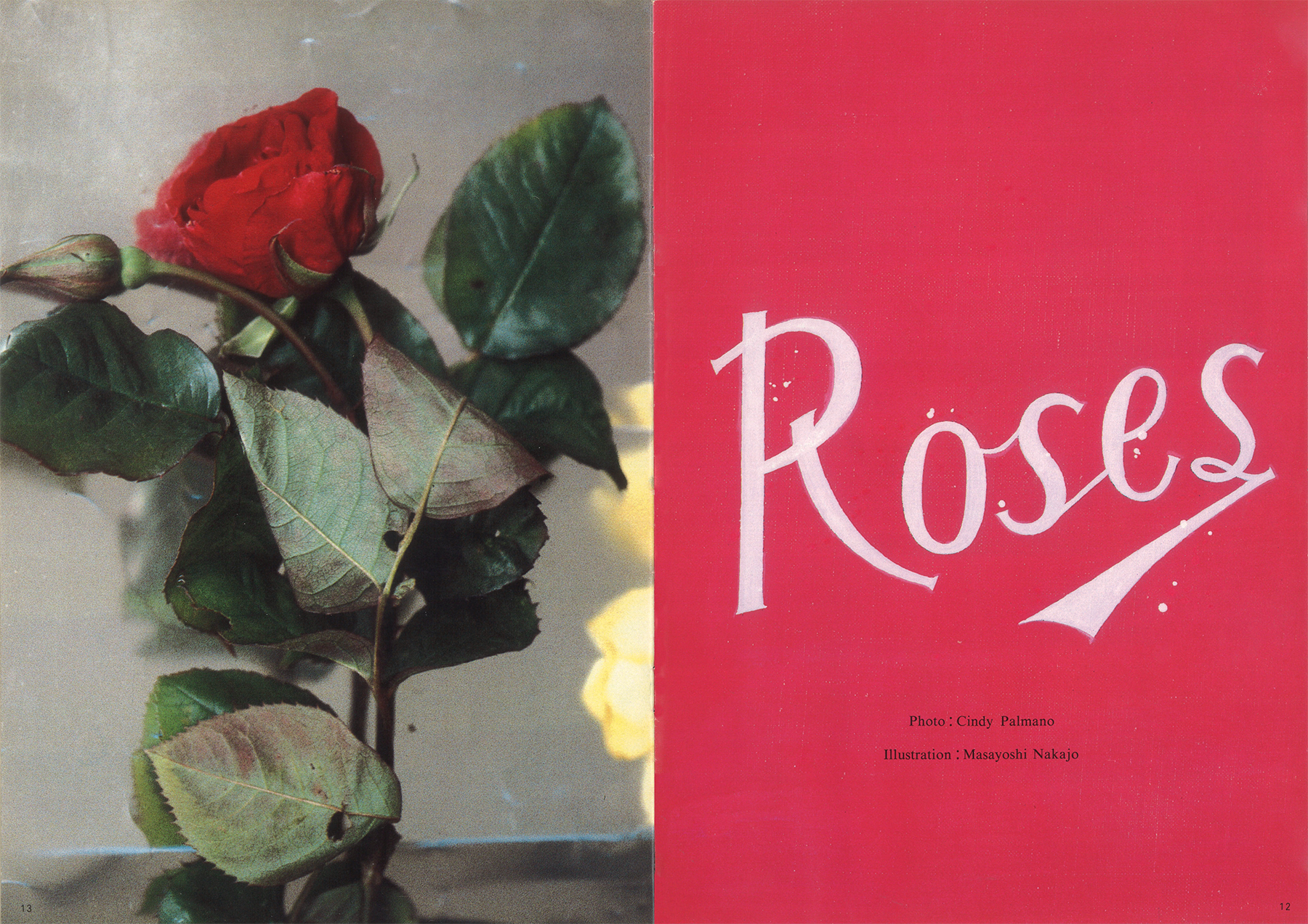
Illustration: 仲條正義 Masayoshi Nakajo
Photographer: シンディ・パルマノ Cindy Palmano
後藤繁雄
1954年大阪府生まれ。アートプロデューサー/編集者/京都芸術大学名誉教授。坂本龍一や篠山紀信らのアーティストブックや写真集を多数編集するほか、コンテンポラリーアートに関する著作も手がける。篠山紀信、蜷川実花らの大型美術館展をはじめ、数々の展覧会をプロデュース。近年ではGINZA SIX中央吹き抜け空間の展示プロデューサーを務めるほか、ハイパーミュージアム飯能の館長も務める。2009年に『花椿ト仲條』(ピエ・ブックス)を編集。『花椿』にて1991年より開始された対談連載は、のちに『独特対談』(リトル・モア)として刊行される。
-
仲條ヲ語る#2 「其ノ、ココロハ 小村雪岱×仲條正義」
Talking about Nakajo #2 "The Spirit Within: Komura Settai × Masayoshi Nakajo"
-
仲條ヲ語る#1 「デザインにも表れる根っからの東京人的気質」
Talking about Nakajo #1 "A fundamentally Tokyoite sensibility—even in design"
-
映画には思いや願いがつまっている
Movies are full of thoughts and wishes.
-
Hanatsubaki New Issue No.833
Hanatsubaki New Issue No.833
-
資生堂×ファッションが輝いていた時(後編)
Shiseido x Fashion: A Time of Radiance
Talking about Nakajo #3 "Masayoshi Nakajo’s Art of “Honka-dori”"
2026.3.24
Text/Shigeo Goto
In conjunction with the exhibition Nakajo Sings, Nakajo Dances—Letters, Pictures, and Shiseido, currently on view at the Shiseido Gallery, this interview series invites people who knew Masayoshi Nakajo well to reflect on his work and perspective.
Through shared memories, conversations, and recollections from the field, what emerges is not only Nakajo the designer, but Nakajo the person.
For this third installment, we welcome art producer and editor Shigeo Goto. Having long been involved with Hanatsubaki, he reflects on Nakajo’s design through the lens of “honka-dori”—a classical Japanese aesthetic practice of transforming an existing motif into something new.
ーーーーーーーーーーーーーーーーーーーー
People often speak of Japan as a culture of wakon-yōsai—Japanese spirit combined with Western learning. But Japan has long excelled at hybrid methods. Not simple quotation or plagiarism, but something closer to honka-dori, the poetic technique perfected by Fujiwara no Teika in the Shin Kokin Wakashū: sampling an earlier “original poem” and transforming it into a new aesthetic expression. You can see this sensibility in the way Japan takes symmetrical aesthetics—whether from China’s Tang-style traditions or the Western grid system—and subtly disrupts them. The word suki refers to the aesthetics of collecting one’s tastes, but it also affirms something slightly off-centre—an acceptance of what might be called a “biased” or eccentric beauty. Ōsugi Sakae once said it brilliantly: “Beauty lies in irregular rhythm.”
I started thinking about all this because Nakajo’s design was exactly that.
I had the honour of running a conversation series in Hanatsubaki for fourteen years. Beyond that, I was also involved in projects such as the Hanatsubaki 500th-issue exhibition at The Ginza Art Space and editing Nakajo’s book Hanatsubaki to Nakajo. For an editor, it was an extraordinary privilege. This was during the golden era of editors-in-chief Keiko Hirayama and Chigi Omata. I wasn’t directly involved in editing the magazine itself, but from the outside I was able to observe closely the ecosystem through which Hanatsubaki was produced. Even before the conversation series began, I frequently commissioned Nakajo for other projects, so I was often hanging around his studio. Nakajo had graduated from the design department at Tokyo University of the Arts, so his background began firmly within modern design. Yet from my perspective, he stood apart from the generation of his seniors—figures such as Yusaku Kamekura and Takashi Kono. If I may put it bluntly, Nakajo had already entered a kind of postmodernity. He possessed a traditional, almost artisanal aesthetic, yet at the same time there was something deeply postmodern about him—something that resonated with Ettore Sottsass. I myself belong to what might be called the YMO generation of editors—raised on techno and sampling. There was a generational gap between us, but somehow we got along well. Nakajo’s approach to honka-dori influenced me greatly. I remember once visiting his studio and finding him sketching layouts for an upcoming Hanatsubaki feature. He always worked in pencil on rough, inexpensive paper. Nakajo constantly looked through overseas fashion magazines. This was before the era of social media. Printed magazines carried the immediacy of global trends and creative culture. Hanatsubaki was edited in a moment when everything was rapidly being reduced to “information.” Nakajo’s work, I think, was to regenerate that information into expression. One thing I learned from him was how carefully he examined magazines from abroad. He would check every page—from the cover to the advertisements on the back cover, even the smallest photographs. Around that time he noticed a small image of a rose in a fashion article—perhaps about Christian Lacroix, if I remember correctly. Looking at it, Nakajo said, “Why don’t we do a feature on roses?” He sketched an idea on that rough paper. Eventually the photographer Cindy Palmano shot it in London, and it became a magnificent spread. It was a perfect example of honka-dori. At first glance it might look like quotation. But the key lies in transformation—the aesthetics of turning something into something else. Something that will not simply be consumed by trends or by its time.
Nakajo always carried a small bag. Inside were things like paperback books he read on the train during his commute. One day I noticed a copy of The Complete Works of Aoyama Jiro (Chikuma Bunko) on his desk. At the time I had not yet read Aoyama Jiro—the great connoisseur who shaped Shirasu Masako’s aesthetic sensibility—so I was surprised and immediately went out to buy the book. Ah, I see. That explained a lot.
I grew up looking at Nakajo’s design for Hanatsubaki as a student. Later, by good fortune, I was able to work with him and learn many of his secrets.
Masayoshi Nakajo— there’s real depth there.
Shigeo Goto
Born in Osaka in 1954. Art producer, editor, and Professor Emeritus at Kyoto University of the Arts. He has edited numerous artist books and photography collections for figures such as Ryuichi Sakamoto and Kishin Shinoyama, and has authored several books on contemporary art. He has also produced major museum exhibitions, including large-scale shows featuring Kishin Shinoyama and Mika Ninagawa. In recent years he has served as exhibition producer for the central atrium space at GINZA SIX and as director of the Hyper Museum Hanno. In 2009 he edited Hanatsubaki to Nakajo (Pie Books). His long-running conversation series in Hanatsubaki, which began in 1991, was later published as Dokutoku Taidan (Little More).